
Article
British settlements and facilities in Scandinavia came under coordinated attack in recent weeks, marking the outbreak of resistance wars across the region. Government sources confirm that these actions were not spontaneous uprisings, but were funded and enabled by an external coalition of states operating under the name the Pew Pew Army.
The attacks, carried out by local armed groups, focused on key infrastructure, supply routes, and industrial sites connected to Britain’s overseas presence. Intelligence assessments indicate that while the resistance fighters on the ground were locally based, their funding, training, and strategic direction originated from the Pew Pew Army coalition.
In response to the coordinated strikes, the Prime Minister immediately convened an emergency cabinet and defence meeting to assess the situation and determine Britain’s next course of action. Senior military commanders, intelligence officials, and foreign policy advisers were brought together to evaluate the scale of the threat, the extent of coalition involvement, and the strategic options available to the government.
Officials confirmed that the meeting marked the beginning of intensive diplomatic and security planning, laying the groundwork for subsequent negotiations with the Pew Pew Army coalition and shaping Britain’s response to the unfolding crisis.

A Strategy of Pressure, Not Total War
Officials stress that the Pew Pew Army did not seek a full-scale war with the United Kingdom. Instead, the coalition authorised a series of rapid, targeted strikes designed to demonstrate strength and impose strategic pressure, while deliberately avoiding escalation into open conflict.
Following these actions, coalition representatives entered negotiations with British officials, outlining clear demands. Chief among them was a complete British withdrawal from Scandinavia and a formal commitment that the UK government and its military would no longer support or assist local factions operating in those territories.
In return, the Pew Pew Army coalition agreed to recognise the sovereignty of the United Kingdom and explicitly accept Britain’s continued control over Ireland, bringing an end to ongoing disputes surrounding territorial legitimacy.
Consequences for Industry and British Interests
The attacks raised immediate concerns for British companies and industries operating in Scandinavia, particularly in resource extraction, manufacturing, and logistics. However, negotiations produced a transitional framework aimed at minimising disruption.
A grace period was agreed upon, granting British firms time to wind down operations, relocate assets, and secure alternative supply chains. Government officials stated that this period would allow for an orderly transition while safeguarding British workers and reducing economic shock at home.
Treaty Summary: Scandinavian Withdrawal Agreement
British Military Withdrawal:
The United Kingdom will fully withdraw its military forces from Scandinavia, ending its direct security presence in the region.
Non-Interference Commitment:
The UK government and its armed forces will refrain from supporting, supplying, or assisting any local factions operating within Scandinavian territories.
Recognition of Sovereignty:
The Pew Pew Army coalition formally recognises the sovereignty of the United Kingdom and explicitly accepts Britain’s continued control over Ireland.
Grace Period for Industry:
British companies operating in Scandinavia are granted a negotiated transition period to conclude operations, relocate assets, and secure alternative arrangements.
Protection of Civilians and Workers:
Both sides commit to ensuring that civilian populations, infrastructure, and industrial personnel are not targeted during the withdrawal and transition process.
Diplomatic Resolution:
Both parties acknowledge the agreement as a negotiated settlement aimed at preventing wider conflict and stabilising the region.

Today, an agreement has been reached.
It was not won through words alone, nor through hesitation. When our people, our workers, and our strategic positions came under attack, we acted decisively—and we did so to prevent a wider and more destructive conflict.
This agreement secures our sovereignty, protects our citizens, and brings an end to further bloodshed in Scandinavia. It ensures the safe withdrawal of our forces on our terms, the protection of British workers and industry, and formal recognition of Britain’s core territories and authority.
Let me be clear: this was not a retreat. It was a negotiated outcome reached from a position of strength.
The world is changing, and Britain will change with it—clear-eyed, prepared, and resolute. We will continue to defend our people, adapt our strategy, and act decisively wherever our security is challenged.
Tonight, Britain stands steady. And tomorrow, we move forward.

A Negotiated Conclusion
After prolonged diplomatic talks, both sides reached a formal agreement. Britain has begun withdrawing its military forces from Scandinavia, effectively ending its presence in the region. In parallel, coalition-backed funding and support for local resistance groups have ceased.
Government statements describe the outcome as a pragmatic resolution to a strategically imbalanced situation. While Britain’s Scandinavian ambitions have come to an end, officials emphasise that the agreement preserves national sovereignty, secures recognition of Britain’s core territories, and avoids a wider conflict with a powerful international coalition.
As forces depart and industries adapt, attention now turns to the long-term consequences of the agreement — and to how Britain will reshape its overseas strategy in an increasingly contested global environment.

Previous article:
Britain Ends the Irish War (8 months ago)
Next article:
The Great Brew Crisis (8 months ago)

About the game:
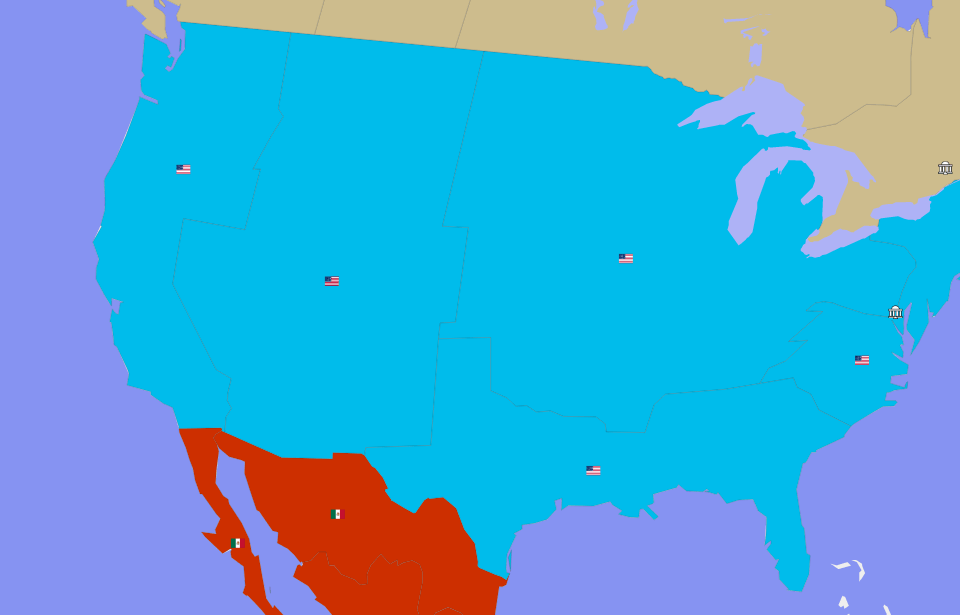
USA as a world power? In E-Sim it is possible!
In E-Sim we have a huge, living world, which is a mirror copy of the Earth. Well, maybe not completely mirrored, because the balance of power in this virtual world looks a bit different than in real life. In E-Sim, USA does not have to be a world superpower, It can be efficiently managed as a much smaller country that has entrepreneurial citizens that support it's foundation. Everything depends on the players themselves and how they decide to shape the political map of the game.
Work for the good of your country and see it rise to an empire.
Activities in this game are divided into several modules. First is the economy as a citizen in a country of your choice you must work to earn money, which you will get to spend for example, on food or purchase of weapons which are critical for your progress as a fighter. You will work in either private companies which are owned by players or government companies which are owned by the state. After progressing in the game you will finally get the opportunity to set up your own business and hire other players. If it prospers, we can even change it into a joint-stock company and enter the stock market and get even more money in this way.
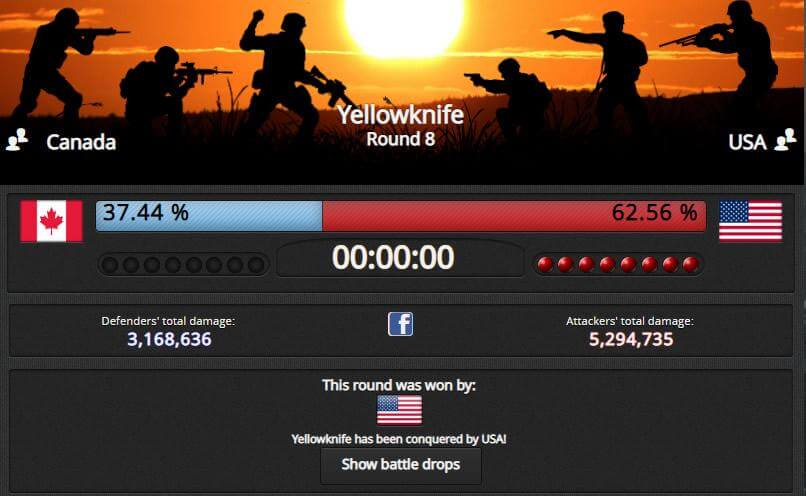
In E-Sim, international wars are nothing out of the ordinary.
Become an influential politician.
The second module is a politics. Just like in real life politics in E-Sim are an extremely powerful tool that can be used for your own purposes. From time to time there are elections in the game in which you will not only vote, but also have the ability to run for the head of the party you're in. You can also apply for congress, where once elected you will be given the right to vote on laws proposed by your fellow congress members or your president and propose laws yourself. Voting on laws is important for your country as it can shape the lives of those around you. You can also try to become the head of a given party, and even take part in presidential elections and decide on the shape of the foreign policy of a given state (for example, who to declare war on). Career in politics is obviously not easy and in order to succeed in it, you have to have a good plan and compete for the votes of voters.
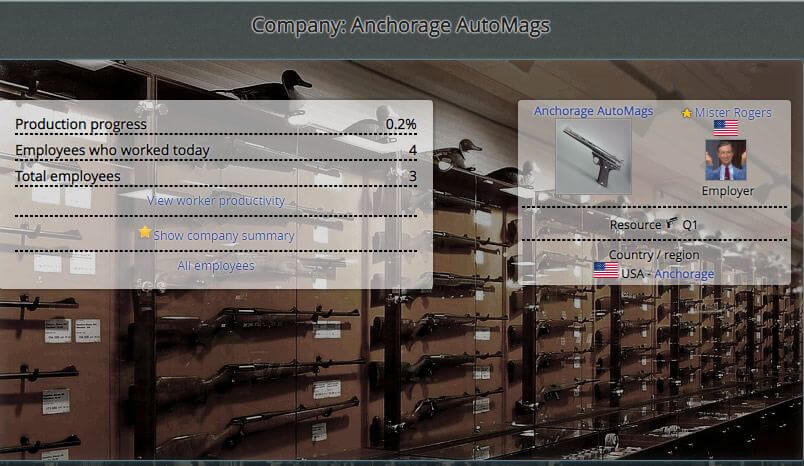
You can go bankrupt or become a rich man while playing the stock market.
The international war.
The last and probably the most important module is military. In E-Sim, countries are constantly fighting each other for control over territories which in return grant them access to more valuable raw materials. For this purpose, they form alliances, they fight international wars, but they also have to deal with, for example, uprisings in conquered countries or civil wars, which may explode on their territory. You can also take part in these clashes, although you are also given the opportunity to lead a life as a pacifist who focuses on other activities in the game (for example, running a successful newspaper or selling products).
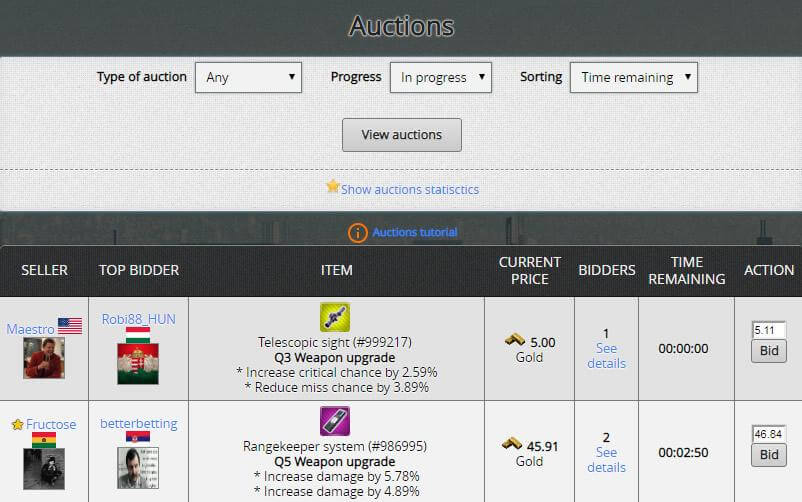
At the auction you can sell or buy your dream inventory.
E-Sim is a unique browser game. Its creators ensured realistic representation of the mechanisms present in the real world and gave all power to the players who shape the image of the virtual Earth according to their own. So come and join them and help your country achieve its full potential.
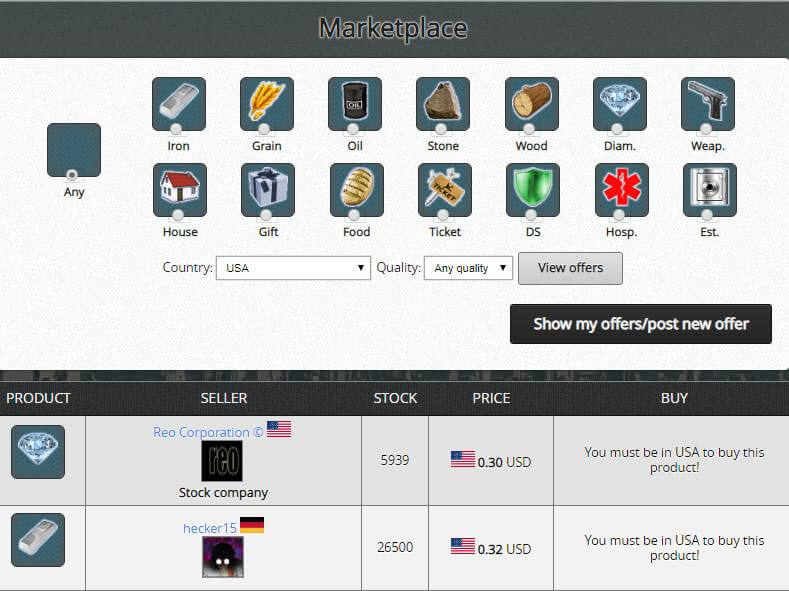
Invest, produce and sell - be an entrepreneur in E-Sim.
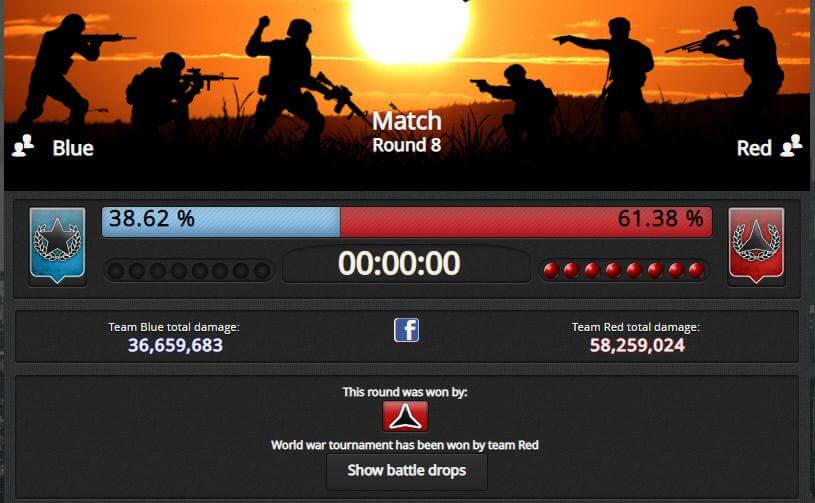
Take part in numerous events for the E-Sim community.
