
Article
Peace negotiations collapsed last night as Ireland’s current government formally rejected further engagement with the United Kingdom, refusing to consider any proposals regardless of the ongoing general election. With polling continuing across the country, Dublin’s leadership made clear that its position would not be moderated by electoral uncertainty or the prospect of a successor administration.
British officials describe the stance as openly defiant. Despite repeated efforts by London to stabilise the situation, the Irish government has resisted, dismissed, and refuted any suggestion of British authority in any region of Ireland, rejecting security arrangements, transitional frameworks, and international oversight without qualification.
This refusal has brought negotiations to an abrupt end. British proposals — including phased disengagement, monitored transitions, and interim security guarantees — were neither examined nor countered, but rejected outright. With dialogue closed and conditions on the ground deteriorating, London now concludes that the current Irish administration has no intention of pursuing a negotiated peace.
London assesses this decision as a deliberate refusal to engage during an election period, taken despite worsening security and economic pressures. With no negotiating partner remaining, British planners are proceeding on the assumption that no agreement will be reached under the present administration.
While the election may yet produce a government willing to revisit talks, Britain cannot allow instability to persist unchecked. With peace rejected by Dublin’s current leadership, further action is now being prepared to safeguard security, protect supply lines, and impose stability where negotiation is no longer possible.

Likely Successor Casts Long Shadow
Overshadowing the election is the figure of a former resistance commander, widely regarded by analysts as the likely victor once ballots are counted. Though he has not yet assumed office, his influence on the political landscape is already evident.
The commander’s prominence dates back to the Battle of Dublin, where Irish resistance forces, despite being heavily outmatched, mounted an organised and determined defence under his leadership. British military assessments from the period acknowledge that defensive positions were established rapidly, supply lines improvised, and urban resistance sustained far longer than anticipated.
Although the capital ultimately fell under British control, after-action reports recognised the discipline and cohesion of the opposing command — an assessment that has since shaped British perceptions of the man now poised to lead Ireland.
Within Ireland, his refusal to withdraw or fragment during the battle — choosing instead to confront British forces directly — has resonated powerfully with voters. As public confidence in the existing political establishment eroded, his reputation as a figure of resolve and clarity has come to dominate the election.
A Mandate Anticipated, Not Yet Granted
British officials note that while the commander is widely expected to prevail, his anticipated victory has complicated the negotiating environment. The current Irish government, weakened and internally divided, has refused to engage meaningfully with London, while authority increasingly rests with a figure not yet formally in office.
At the same time, British diplomats acknowledge that the commander has shown indications of a more pragmatic approach. Though his background as a military leader and his role in resisting British forces are well known, he has signalled a willingness to work with the British government once vested with formal authority. Officials stress, however, that such engagement cannot occur on the basis of assumption rather than mandate.
This transitional uncertainty has created an untenable gap. Britain is unwilling to commit to long-term frameworks that could be rejected or reshaped by an incoming administration, but equally unwilling to allow instability, armed resistance, or disruption to take hold in the absence of a functioning negotiating partner.
London has permitted the election process to proceed without interference, despite ongoing security concerns, as a deliberate show of good faith. Until a government with a clear mandate is in place, however, Britain has made clear that it will act decisively to prevent disorder and ensure that instability or militant activity is not allowed to create weakness during the political transition.

British Response: Stability Will Be Enforced
Following the breakdown of talks, the British government has moved swiftly to adjust its posture.
Defence officials confirmed overnight that military units have been repositioned across key regions in response to intelligence indicating potential mobilisation by resistance elements opposed to any negotiated outcome. These deployments are described as precautionary, but firm.
A senior government source summarised the position bluntly: if the new Irish government is unwilling to accept peace, Britain will have no choice but to impose stability.
Planning now openly acknowledges the possibility of a comprehensive occupation of Ireland should resistance escalate. Officials stress that such measures would not be symbolic or limited. Any armed groups attempting to exploit political deadlock will be met decisively, with particular focus on securing Northern Ireland and preventing the re-emergence of sustained insurgency.
As one defence official put it, “There can be no ambiguity. Stability will be enforced where it cannot be negotiated.”

Supply Pressures and the Strategic Importance of Resources
Beyond the immediate security implications, the collapse of negotiations raises renewed concerns over food supply and resource stability across the region. Officials warn that prolonged unrest in Ireland risks placing additional strain on agricultural output, transport corridors, and distribution networks already disrupted by years of conflict.
British planners have long viewed stability in Ireland as a key factor in maintaining predictable supply flows, particularly to Northern Ireland, where insecurity has previously led to shortages and price volatility. The prospect of renewed resistance activity targeting roads, railways, or ports has reinforced concerns that failed negotiations could further complicate civilian logistics and military provisioning alike.
In Whitehall, there is quiet acknowledgement that any escalation will increase demand on British supply systems — not only to support security operations, but to ensure civilian populations are shielded from the economic consequences of instability. Officials stress that this consideration has informed the government’s firm stance: disorder cannot be allowed to jeopardise essential goods.
Greenland Campaign Provides Strategic Relief
In this context, attention has increasingly turned to Britain’s overseas production initiatives, particularly the Greenland campaign, which officials now describe as a critical strategic buffer.
Unlike Ireland, Greenland remains entirely outside the influence of resistance groups or political uncertainty. Agricultural and industrial production there has expanded steadily, providing Britain with a secure source of food and raw materials insulated from regional unrest. Defence and economic planners alike note that this independence offers vital resilience should supply routes in Ireland come under pressure.
Senior officials have privately indicated that the success of the Greenland programme has reduced Britain’s vulnerability to disruptions caused by failed diplomacy. While no overseas initiative can fully replace domestic or regional production, Greenland’s output has already eased pressure on mainland supply chains and strengthened Britain’s negotiating position.
As one government source put it, “Security and food stability are inseparable. Where peace cannot be guaranteed, alternative capacity must be secured.”
Stability as a Necessity, Not an Option
The British government insists that its response to resistance activity — and its willingness to escalate if required — is driven as much by economic and humanitarian considerations as by security doctrine. Prolonged instability threatens not only political order but the basic functioning of daily life.
With negotiations collapsed, Britain now signals that it will act decisively to prevent disruption, safeguard supply routes, and maintain access to essential resources. The success of the Greenland campaign provides reassurance that Britain can absorb pressure, but officials stress it does not lessen the need to impose stability closer to home.
In the absence of agreement, Britain’s position is clear: peace is preferred, but continuity — of security, food, and governance — will be enforced where necessary.

Tonight’s Election
Polling continues tonight as the United Kingdom awaits the outcome of a closely watched election. With results pending, voters face a clear choice: to endorse leadership credited with restoring stability and reinforcing support across key regions, or to chart a different course at a moment of heightened uncertainty.

Previous article:
From Battlefield to Breadbasket (8 months ago)
Next article:
Britain Ends the Irish War (8 months ago)

About the game:
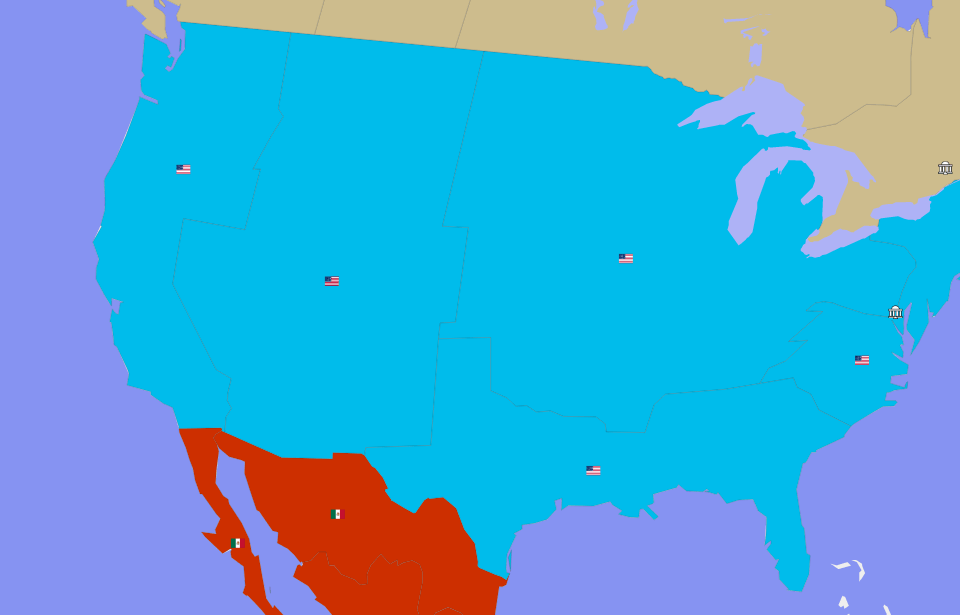
USA as a world power? In E-Sim it is possible!
In E-Sim we have a huge, living world, which is a mirror copy of the Earth. Well, maybe not completely mirrored, because the balance of power in this virtual world looks a bit different than in real life. In E-Sim, USA does not have to be a world superpower, It can be efficiently managed as a much smaller country that has entrepreneurial citizens that support it's foundation. Everything depends on the players themselves and how they decide to shape the political map of the game.
Work for the good of your country and see it rise to an empire.
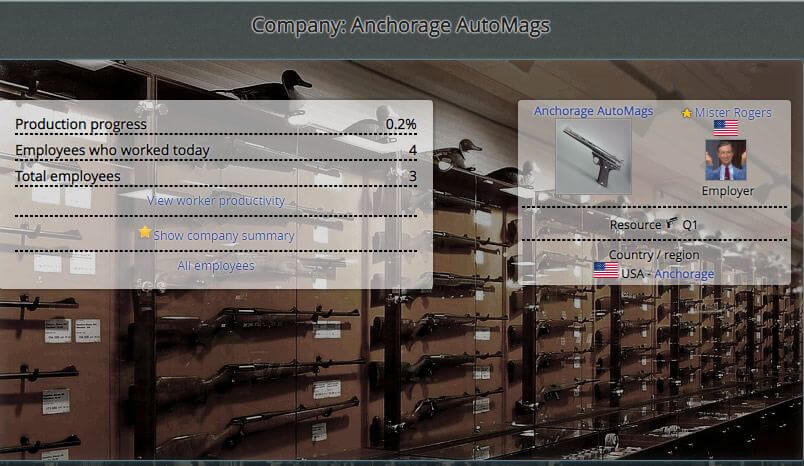
Activities in this game are divided into several modules. First is the economy as a citizen in a country of your choice you must work to earn money, which you will get to spend for example, on food or purchase of weapons which are critical for your progress as a fighter. You will work in either private companies which are owned by players or government companies which are owned by the state. After progressing in the game you will finally get the opportunity to set up your own business and hire other players. If it prospers, we can even change it into a joint-stock company and enter the stock market and get even more money in this way.
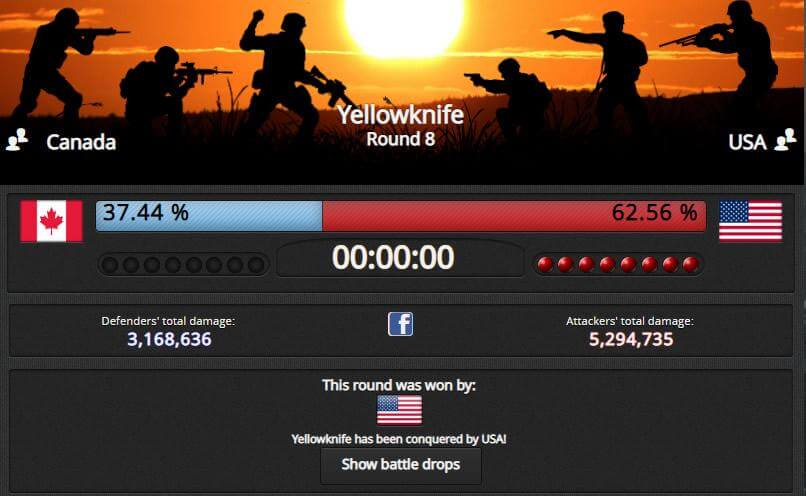
In E-Sim, international wars are nothing out of the ordinary.
Become an influential politician.
The second module is a politics. Just like in real life politics in E-Sim are an extremely powerful tool that can be used for your own purposes. From time to time there are elections in the game in which you will not only vote, but also have the ability to run for the head of the party you're in. You can also apply for congress, where once elected you will be given the right to vote on laws proposed by your fellow congress members or your president and propose laws yourself. Voting on laws is important for your country as it can shape the lives of those around you. You can also try to become the head of a given party, and even take part in presidential elections and decide on the shape of the foreign policy of a given state (for example, who to declare war on). Career in politics is obviously not easy and in order to succeed in it, you have to have a good plan and compete for the votes of voters.
You can go bankrupt or become a rich man while playing the stock market.
The international war.
The last and probably the most important module is military. In E-Sim, countries are constantly fighting each other for control over territories which in return grant them access to more valuable raw materials. For this purpose, they form alliances, they fight international wars, but they also have to deal with, for example, uprisings in conquered countries or civil wars, which may explode on their territory. You can also take part in these clashes, although you are also given the opportunity to lead a life as a pacifist who focuses on other activities in the game (for example, running a successful newspaper or selling products).
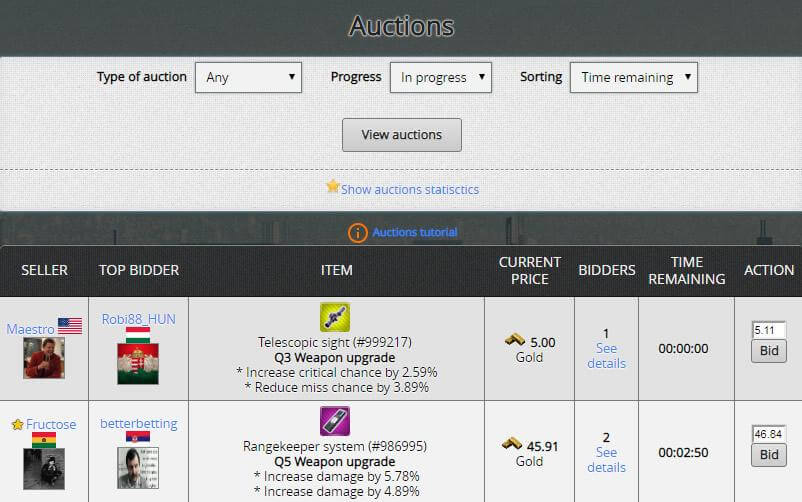
At the auction you can sell or buy your dream inventory.
E-Sim is a unique browser game. Its creators ensured realistic representation of the mechanisms present in the real world and gave all power to the players who shape the image of the virtual Earth according to their own. So come and join them and help your country achieve its full potential.

Invest, produce and sell - be an entrepreneur in E-Sim.
Take part in numerous events for the E-Sim community.
